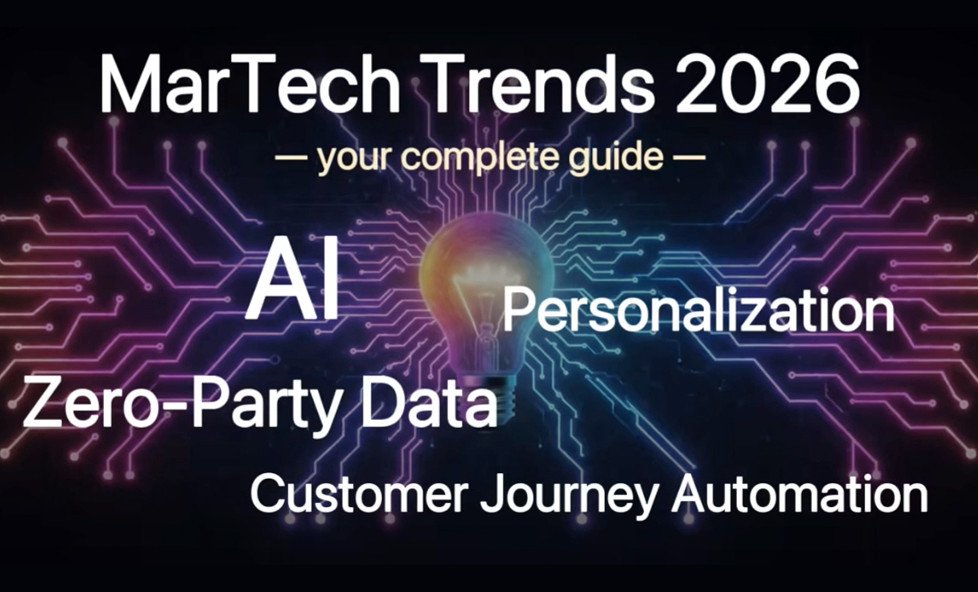
Marketing technology, or ‘martech’, has become a cornerstone of modern marketing strategies. As brands face increasingly complex consumer behaviours, fragmented digital channels, and growing demands for personalised experiences, leveraging technology effectively is no longer optional—it is essential. The year 2026 promises to be a transformative period for martech, where data-driven insights, automation, artificial intelligence, and integrated platforms will enable marketers to turn raw data into actionable demand.
Martech encompasses a broad spectrum of tools, including customer data platforms (CDPs), analytics dashboards, automation engines, AI-driven content solutions, and emerging technologies such as augmented reality, virtual reality, and voice interfaces. These tools empower marketers to gather insights, optimise campaigns, personalise experiences, and ultimately convert engagement into measurable results.
This article explores the most transformative martech trends in 2026, offering guidance on how brands can leverage these innovations to drive demand, improve customer experiences, and gain a competitive advantage in an evolving digital landscape.
The Shift from Intuition to Data-Driven Marketing
One of the most significant shifts in modern marketing is the transition from intuition-based decision-making to data-driven strategies. In 2026, brands will rely heavily on data to understand customer behaviour, predict trends, and optimise marketing efforts.
Data from digital interactions, social media engagement, website analytics, CRM systems, and e-commerce platforms will provide marketers with actionable insights. These insights allow for precise audience segmentation, personalised messaging, and predictive campaign planning. Rather than guessing what audiences want, marketers can base decisions on real behavioural patterns and metrics, increasing efficiency, relevance, and ROI.
This trend underscores the importance of building robust data infrastructure and analytics capabilities, ensuring that marketers can translate raw information into meaningful insights and actionable campaigns.
Customer Data Platforms: The Foundation for Personalisation
Customer data platforms (CDPs) have emerged as a central element of martech stacks. By aggregating data from multiple sources—websites, apps, social media, in-store interactions, and third-party datasets—CDPs create unified customer profiles.
In 2026, CDPs will enable marketers to deliver highly personalised content, offers, and experiences across channels. Personalisation will extend beyond basic segmentation to dynamic content tailored to individual behaviour, preferences, and predictive needs. For instance, an online retailer may use CDP insights to recommend products, optimise pricing, and provide targeted promotions at the precise moment a customer is likely to convert.
CDPs also facilitate compliance with data privacy regulations by ensuring that data is handled ethically and transparently, which is increasingly important for building trust in digital interactions.
Artificial Intelligence and Machine Learning in Marketing
Artificial intelligence (AI) and machine learning (ML) continue to redefine martech capabilities. In 2026, these technologies will enable advanced automation, predictive analytics, content optimisation, and customer journey personalisation.
AI-driven marketing tools can analyse vast datasets in real-time, identify patterns, and deliver recommendations for campaign adjustments. Predictive models allow marketers to anticipate customer behaviour, such as likelihood to purchase, churn risk, or engagement potential, enabling proactive and targeted campaigns.
Machine learning algorithms can optimise digital advertising, email campaigns, and content distribution by automatically testing variations and selecting the best-performing options. This approach reduces human error, accelerates decision-making, and increases the efficiency and effectiveness of marketing efforts.
Omnichannel Marketing Integration
Consumers in 2026 interact with brands across multiple channels—websites, social media, mobile apps, email, physical stores, and emerging platforms such as voice assistants or AR experiences. Omnichannel integration ensures consistent messaging, seamless customer journeys, and cohesive brand experiences.
Martech platforms will enable marketers to coordinate campaigns across these channels, providing visibility into customer interactions at each touchpoint. For example, a customer who browses a product on a website might receive a follow-up email with personalised content, see an ad on social media, and encounter a tailored in-store recommendation.
Integrated martech solutions facilitate these experiences, ensuring that brands can meet customer expectations for relevance, convenience, and consistency.
Marketing Automation and Workflow Efficiency
Marketing automation tools have become indispensable for executing campaigns efficiently at scale. As part of transformative martech trends in 2026, automation will extend beyond email and social media to include advanced customer journey orchestration, AI-driven content delivery, and automated performance reporting.
Automated workflows allow marketers to trigger personalised messages based on behaviour, schedule multi-step campaigns, and segment audiences dynamically. Automation frees up teams to focus on strategy, creative development, and audience engagement while ensuring campaigns are timely, accurate, and responsive.
For instance, an automated system can nurture leads from initial awareness to purchase, sending contextually relevant content, reminders, and offers based on individual interactions. This reduces friction, increases conversion, and strengthens customer relationships.
Content Marketing and AI-Enhanced Creativity
Content remains the cornerstone of digital marketing, and in 2026, AI will enhance both creation and distribution. AI tools can generate copy suggestions, optimise headlines, create visuals, and even personalise content at scale.
AI-driven content marketing allows brands to maintain relevance across multiple channels while addressing diverse audience preferences. Predictive analytics can guide which topics, formats, and timing resonate most effectively with target segments.
However, human creativity remains essential for authentic storytelling, brand voice, and emotional engagement. AI enhances efficiency and insight but works best in partnership with creative teams who can craft compelling narratives that resonate with audiences.
Voice Search and Conversational Marketing
Voice search adoption is expected to rise significantly by 2026, driven by smart devices and virtual assistants. Brands must optimise content for voice queries, conversational search, and natural language processing to maintain discoverability.
Conversational marketing tools, such as chatbots and AI-driven assistants, allow brands to engage customers in real-time, answer questions, and guide purchase decisions. These tools not only improve user experience but also provide valuable insights into customer intent and behaviour.
Integrating voice search and conversational interfaces into martech strategies ensures that brands remain accessible and responsive in an increasingly voice-driven digital landscape.
Data Privacy and Ethical Marketing
As data collection and AI-driven personalisation become more sophisticated, marketers must prioritise privacy, transparency, and ethical use of consumer information. Compliance with local and international regulations, such as GDPR, UAE data protection laws, and industry best practices, is critical.
Ethical marketing builds trust, fosters loyalty, and enhances brand reputation. Martech platforms will increasingly provide built-in tools for managing consent, data security, and compliance reporting, allowing marketers to balance personalisation with responsibility.
Brands that demonstrate ethical practices in handling data will gain a competitive advantage by earning consumer confidence and long-term engagement.
Predictive Analytics and Demand Forecasting
Transformative martech relies on predictive analytics to move from reactive campaigns to proactive demand generation. By analysing historical data, consumer behaviour, and market trends, predictive models allow marketers to forecast demand, identify opportunities, and optimise campaigns.
For example, predictive analytics can guide inventory planning for e-commerce, timing of product launches, and targeted offers to high-value segments. Marketers can allocate budgets efficiently, focus on high-impact campaigns, and reduce wasted spend while maximising ROI.
Demand forecasting powered by martech ensures that brands can respond quickly to changing market conditions and capitalise on emerging trends before competitors.
Hyper-Personalisation and Customer Journey Mapping
Transformative Martech Trends in 2026 will encompass successful martech strategies, combining hyper-personalisation with detailed customer journey mapping. Consumers expect experiences tailored to their unique needs, preferences, and behaviours across every touchpoint.
Customer journey mapping tools integrated with AI and data platforms allow marketers to visualise interactions, identify pain points, and create targeted interventions that enhance conversion and loyalty. Hyper-personalisation can include customised product recommendations, personalised content streams, targeted offers, and dynamic website experiences.
By aligning content, messaging, and engagement with individual journeys, marketers can turn insights into actionable demand and strengthen brand-consumer relationships.
Emerging Martech Ecosystem and Platform Consolidation
The martech landscape is expanding rapidly, with hundreds of specialised tools available for analytics, automation, content management, and customer engagement. By 2026, platform consolidation and integrated ecosystems will simplify workflows and enhance efficiency.
Brands will increasingly rely on unified martech stacks that connect data, content, automation, and analytics in a seamless environment. Consolidation reduces complexity, eliminates data silos, and allows teams to focus on strategy and creative execution rather than managing disconnected tools.
Selecting an integrated, scalable martech ecosystem ensures that brands can respond to future trends, adapt to new channels, and deliver consistent, measurable results.
Real-Time Marketing and Agile Campaigns
Consumer expectations for immediacy continue to rise. Real-time marketing, supported by martech, allows brands to respond to trends, news, and customer behaviour instantly.
By leveraging automation, analytics, and AI, marketers can launch campaigns dynamically, personalise messaging on the fly, and optimise outcomes in real-time. Agile campaign structures enable rapid testing, iterative improvements, and responsiveness to unexpected events, giving brands a competitive edge.
Real-time, data-driven marketing transforms insights into actionable demand, ensuring campaigns are relevant, timely, and impactful.
Closing Thoughts
The year 2026 represents a transformative moment for marketing technology. Martech trends such as AI-driven personalisation, predictive analytics, omnichannel integration, interactive content, voice interfaces, and unified data platforms will empower brands to turn insights into actionable demand.
By investing in robust data infrastructure, embracing automation, leveraging AI-enhanced creativity, and prioritising ethical practices, marketers can future-proof strategies, drive engagement, and optimise performance. Personalisation, real-time responsiveness, and immersive experiences will become central to consumer expectations, making martech a critical enabler of growth.
Brands that adopt these transformative martech trends strategically will not only capture audience attention but also convert insights into meaningful, measurable outcomes. In a rapidly evolving digital ecosystem, the ability to transform data into actionable demand will distinguish leading brands from the competition, ensuring long-term relevance, loyalty, and success in 2026 and beyond.